

Right, let’s start with something nobody says out loud but everyone knows: most people aren’t as good at sex as they think they are. And that’s completely fine. Because “getting better at sex” isn’t about unlocking some secret technique you’ve been missing – it’s about being more present, more communicative, and more tuned in to whoever you’re with.
Whether you’re relatively new to it, getting back into the game after a dry spell, or just quietly wondering why it hasn’t been as good as it could be – you’re in the right place. This guide covers the actual stuff that makes a difference, told straight, without the clinical tone or the over-enthusiastic lifestyle magazine energy.
Can You Really Get Better at Sex?
Short answer: absolutely. Sex isn’t a fixed talent – it’s a skill. Like cooking or driving, some people have a head start and most of us improve with practice and a bit of honest reflection. The people who seem effortlessly good at it have usually just done more listening – to their own body, and to their partner’s.
The biggest mistake people make is treating sex like a performance to nail rather than a conversation to have. Once you drop that frame, everything gets easier.
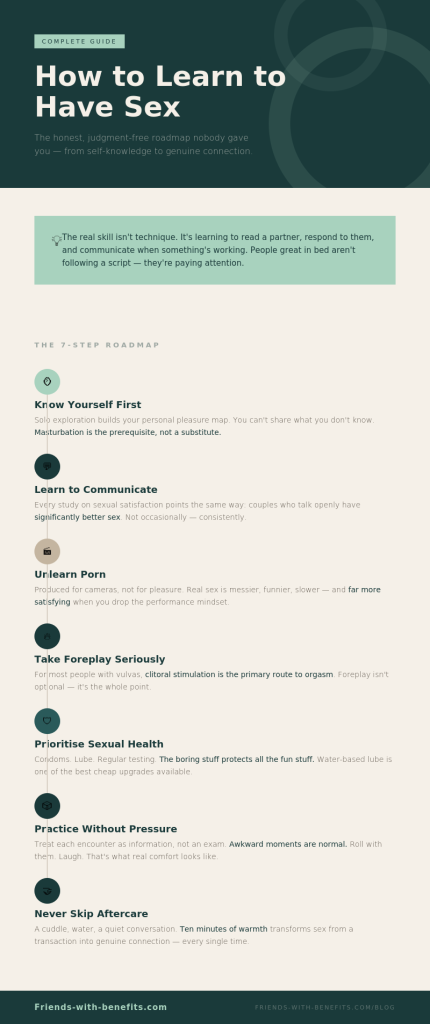
Start With Yourself: Know Your Own Body First
This is the bit that gets skipped most, and it shows. If you don’t know what you like, you can’t tell anyone else.
Solo Exploration Is Actual Homework
Masturbation isn’t a consolation prize – it’s how you build your sexual self-awareness. Take your time with it, explore slowly, and pay attention. What kind of touch, speed, pressure, rhythm works for you? Where are your most responsive areas beyond the obvious ones?
That knowledge travels with you. People who’ve done this work can guide a partner confidently and without embarrassment. People who haven’t end up hoping their partner guesses right.
The Erogenous Zones Nobody Mentions
The neck, inner wrists, behind the knees, lower back, ears, inner thighs – the human body is far more interesting than most people explore. Spending time mapping these solo means you know what to ask for, and you know where to pay attention when you’re with someone else.
Communication: The Actual Thing That Separates Good Sex From Great Sex
Every survey, every sex therapist, every honest friend will tell you the same thing: the people who are genuinely good in bed can talk. They say “that feels brilliant, don’t stop” and “a bit softer please” without making it weird.
Brits are famously terrible at this. We apologise for everything except the things we actually need to bring up. In the bedroom, that’s an issue.
The Positive Frame Trick
Saying “not like that” is a door-close. Saying “I love it more when you…” is a door-open. Same information, completely different effect. The second makes your partner feel invited to do something right, not corrected for doing something wrong. Use it constantly.

Consent as a Practice, Not a Formality
Enthusiastic consent isn’t just a legal box – it’s what allows people to relax fully. Checking in mid-sex (“you still enjoying this?”, “shall I keep going?”) isn’t clinical, it’s engaged. It tells your partner you’re present and paying attention, which is genuinely one of the most attractive things a person can do.
Unlearn What Porn Taught You
This is probably the most important section in the whole guide, particularly for anyone who’s spent significant time watching it.
Porn is not sex education. It’s performance – shot for a camera, paced for dramatic effect, populated by professionals whose bodies and stamina don’t reflect any normal person’s experience. The sex in your life will not look like that, and it doesn’t need to.
Things to specifically unlearn:
- That penetration is always the main event. For most people with vulvas, it isn’t – clitoral stimulation is far more relevant to orgasm.
- That louder and faster = better. Often the opposite is true.
- That everyone gets to orgasm every time. Sometimes brilliant sex ends without one for one or both people, and that’s fine.
- That awkward pauses, position changes, and accidental comedy moments are failure. They’re just life.
Foreplay: Stop Treating It Like a Warm-Up
This is where most people who want to get better at sex can make the biggest immediate improvement. Foreplay is not the appetiser before the “real meal.” For a large proportion of people – especially those with vulvas – it is the main meal.
Research consistently shows that the clitoral complex requires sustained, varied clitoral stimulation for most people to reach orgasm, and penetration alone rarely provides that. Foreplay that involves varied kissing, full-body touching, teasing, oral play and building anticipation dramatically changes what happens next.
And foreplay doesn’t start in the bedroom. A suggestive message earlier in the day, a long lingering look, a hand on the lower back – tension builds over hours, not minutes.
Sexual Health: The Boring Bit You Actually Need
Nobody finds STI conversations sexy. But getting one is far less sexy.
Use Protection Correctly
Condoms still protect against both pregnancy and most STIs – nothing else does both simultaneously. Use them properly. Check expiry dates. Don’t use oil-based lubricants with them. Store them somewhere that isn’t a hot wallet or a glove compartment. The NHS has comprehensive, plain-English guidance on contraception and sexual health – it’s worth a proper read if you haven’t in a while.

Lube Changes Everything
Regardless of how much natural lubrication is present, added lube makes sex more comfortable, reduces friction, and reduces the risk of small tears. Water-based is the most versatile and condom-compatible. Keep a bottle accessible. It’s one of the cheapest and most effective upgrades to your sex life available.
Practice Without Turning It Into a Performance Review
Here’s where most people get stuck: they judge every sexual encounter like it’s an audition. Something goes slightly off – a missed cue, an awkward position change, an accidental noise – and they decide they’re “bad at sex.”
That framing is genuinely counterproductive. It creates self-consciousness, which creates tension, which directly undermines pleasure. Instead, treat each encounter as data: you’re learning something about yourself and this particular partner. Not every session needs to be outstanding. Some will be brilliant. Some will be fine. And some will be slightly bizarre. All of it is normal, and all of it teaches you something.
Practical principles:
- Choose partners who are kind. In long-term relationships or friends-with-benefits situations, kindness is the baseline requirement.
- Go slower than you think you need to. Speed is rarely the answer.
- Laugh when things go wrong. Bodies are weird and funny. Roll with it.
- Don’t have sex when you’re exhausted. You’re working against yourself.
Aftercare: The Bit Experienced Lovers Never Skip
Aftercare is what you do after sex – for each other. The cuddle, the conversation, the glass of water, the lying together quietly. It’s what separates sex from connection.
Even in casual contexts, a few minutes of warmth after the fact changes the entire tone of the experience. Both people feel cared for rather than used. It costs nothing and has an outsized effect.
Common Mistakes – and How to Skip Them
- Faking it. You’re training your partner to keep doing the wrong thing.
- Ignoring feedback cues. If your partner shifts away, goes quiet, or seems absent – check in.
- Never discussing it after. A quick debrief (“what was great, what could be even better”) is the fastest learning tool you have.
- Going for impressive over enjoyable. Nobody cares about the acrobatic position if the simpler thing felt better.
- Forgetting that your pleasure matters too. Sex should work for both of you.
The Bottom Line
Getting better at sex is a project of paying more attention – to yourself, to your partner, to what’s actually happening rather than what you think should be happening. The technical stuff matters a bit. The soft skills matter a lot more.
Be present. Be honest. And be willing to laugh. And don’t forget that the person you’re most likely to have the best sex of your life with is someone you can actually talk to.
Frequently Asked Questions
Is it normal to be bad at sex at first?
Entirely. Nobody starts out great at anything. Most people find their comfort and skill within their first few regular experiences with a particular partner.
How do I tell my partner what I want without it being awkward?
Frame it positively and specifically: “I love it when you do X” or “I’d really like to try Y.” During sex is better than after – it’s more useful in the moment and feels less like a debrief.
Does lasting longer automatically mean better sex?
No. It means lasting longer. Quality isn’t measured in time. Finishing earlier while both people genuinely enjoyed it beats going for an hour while one person checks out.
Can sex be good without an orgasm?
Yes, often very much so. Connection, sensation and closeness don’t require a climax to be meaningful. Don’t make orgasm the only measure of success.
How important is foreplay, really?
Enormously. For most people with vulvas, clitoral stimulation – not penetration – is what leads to orgasm. Skipping foreplay doesn’t just affect mood; it physically affects readiness and comfort.
What if I feel too anxious during sex?
Very common, especially with new partners. Performance anxiety is one of the most reported issues. Slowing down, breathing, focusing on what you feel rather than how you’re performing, and being with someone you trust all reduce it significantly.
How do I bring up trying something new without making it weird?
Frame it as mutual curiosity: “I’d love to try X with you sometime” rather than implying something is missing. Timing matters – bring it up outside the bedroom, not right in the middle of things.
Is it okay to laugh during sex?
Not just okay – often a sign things are going well. Bodies are weird and funny. Partners who can laugh together are usually the ones who have the best sex.
What’s the best position for beginners?
Whatever feels comfortable for both people. Missionary allows good communication and eye contact; spooning is low pressure and works well when you want intimacy without too much performance. Ignore any pressure to attempt acrobatics early on.
How do I know if my partner is actually enjoying it?
Ask. Genuinely, simply: “Does this feel good?” Body language helps but isn’t reliable enough on its own. Checking in verbally takes two seconds and removes all the guesswork.